Design
LITTLE COUNTRY KENNELS
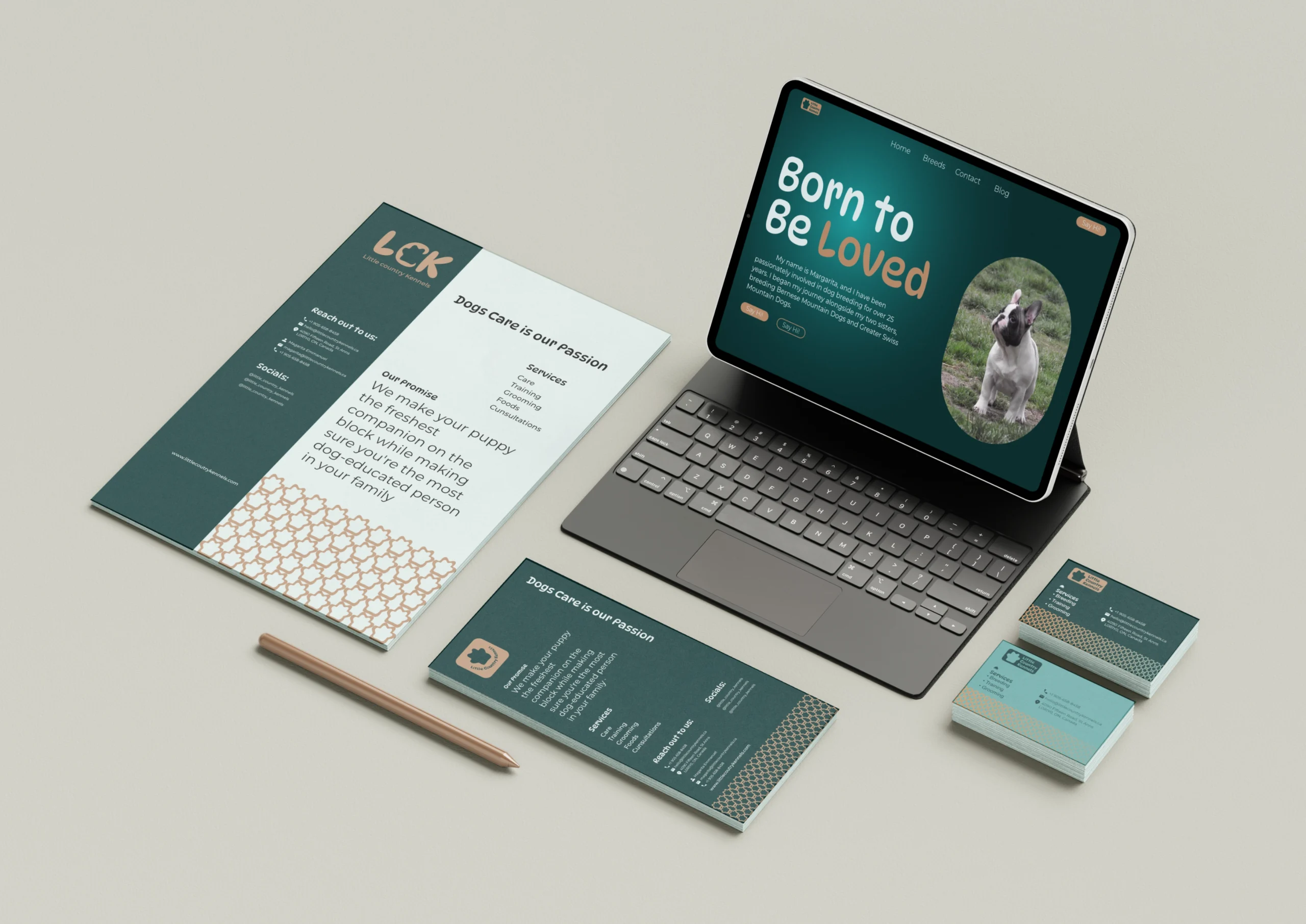
Project Brief: Little Country Kennels Brand Visual Identity Design Project Title: Little Country Kennels Brand Visual Identity Design Client: Little Country Kennels Designer: Eze Emmanuel 1. Executive Summary This project outlines the development of a comprehensive brand visual identity for Little Country Kennels, a dog breeding and care business committed to quality, integrity, and the lifelong well-being of dogs. The primary goal is to establish a strong, recognizable, and trustworthy brand presence that effectively communicates the company's values and differentiates it in a competitive market.  2. Background Little Country Kennels, founded by Margarita Emmanuel, is built on over 25 years of experience in dog breeding, initially with Bernese Mountain Dogs and Greater Swiss Mountain Dogs, and later expanding to French Bulldogs and small breeds like Havanese. The business offers services including breeding, training, care, and grooming. Margarita's background as a postpartum nurse underscores her nurturing approach and dedication to life, growth, and family, values that are deeply embedded in the kennel's operations. The brand's promise is a commitment to quality, integrity, and the lifelong well-being of every dog and puppy entrusted to their care. 3. Problem Statement (Business Challenges Addressed) Prior to this design initiative, Little Country Kennels faced several challenges that a strong visual identity aims to resolve: • Lack of Brand Recognition and Differentiation: Without a unique and memorable visual identity, the business struggled to stand out in a crowded pet care market, making it difficult for potential clients to remember and distinguish it from competitors. • Inconsistent Brand Communication: A fragmented visual presence across various platforms could lead to a disjointed brand experience, hindering the formation of a clear and consistent perception of the brand's professionalism and values. • Difficulty Conveying Core Values and Professionalism: Effectively communicating the brand's deep commitment to quality, integrity, and animal well-being was challenging without a thoughtfully designed visual system. An unprofessional visual presentation could inadvertently create subconscious doubt among clients, impacting trust and credibility. • Limited Versatility and Scalability of Visual Assets: An undefined visual identity would likely lack the adaptability needed to function consistently and effectively across diverse applications, from small digital icons to large physical signage, thereby limiting the brand's reach and impact. 4. Solution Overview (Design Approach and Objectives) The brand visual identity design provides strategic solutions through a focused approach on typography, color, and logo development to create a cohesive and impactful brand image. The design aims to: • Establish a Distinctive and Memorable Identity: Develop a logo that is simple, memorable, versatile, and timeless, ensuring instant recognition and differentiation. • Ensure Consistent and Clear Communication: Implement a controlled typography system and a strategic color palette to maintain visual cohesion and enhance readability across all brand touch points. • Effectively Convey Brand Values: Utilize color psychology and design principles to communicate the brand's nurturing, welcoming, and professional ethos. • Provide Versatile and Scalable Assets: Create visual elements that are adaptable across all digital and physical mediums without compromising quality or consistency.
The brand visual identity design for Little Country Kennels addresses several critical business challenges inherent in establishing a recognizable and trustworthy presence in the pet care industry. Prior to this design initiative, the business likely faced issues related to brand perception, market differentiation, and consistent communication.
1. Lack of Brand Recognition and Differentiation: In a competitive market, a generic or undefined visual presence makes it difficult for a business to stand out. Without a unique identity, Little Country Kennels would struggle to be remembered by potential clients and differentiate itself from other breeders and pet care providers. The absence of a strong visual mark could lead to a diluted brand image, hindering memorability and instant recognition.
2. Inconsistent Brand Communication: Without a standardized visual system, the business would likely exhibit inconsistencies across various communication channels, from digital platforms to physical materials. This fragmentation could lead to a disjointed brand experience, making it harder for customers to form a clear and consistent perception of Little Country Kennels' values and professionalism.
3. Difficulty Conveying Core Values and Professionalism: Little Country Kennels emphasizes a commitment to "quality, integrity, and the lifelong well-being of every dog and puppy". Without a thoughtfully designed visual identity, it would be challenging to communicate these profound values effectively. An unprofessional or inconsistent visual presentation could inadvertently breed subconscious doubt among potential clients, undermining trust and credibility.
4. Limited Versatility and Scalability of Visual Assets: An undefined or poorly conceived visual identity would likely lack the versatility required to function effectively across diverse applications, from small digital icons to large physical signage. This limitation would restrict the brand's ability to maintain a consistent and impactful presence in all necessary contexts.
The brand visual identity design for Little Country Kennels provides comprehensive solutions to the business problems identified, establishing a strong, recognizable, and trustworthy brand presence. The design strategy focuses on typography, color, and logo development to achieve these objectives.
1. Enhanced Brand Recognition and Differentiation:
Distinctive Logo: The design emphasizes the creation of a logo that is simple, memorable, versatile, and timeless, ensuring it stands apart from competitors. This distinctiveness helps Little Country Kennels achieve instant recognition and recall in a crowded market.
Purposeful Visual Elements: By carefully combining elements like wordmarks, lettermarks, symbols, or combination marks, the logo is designed to be a powerful visual trigger that communicates the brand's essence quickly.
2. Consistent and Clear Brand Communication:
Controlled Typography: The design recommends using no more than two font families (DynaPuff for headings and Montserrat for paragraphs) to ensure clarity and consistency across all brand materials. This approach prevents visual clutter and maintains a cohesive brand message.
Accessibility and Readability: Typefaces are chosen for their accessibility and readability, ensuring that the brand's message can be effortlessly consumed across different mediums and by various audiences.
Brand Representation through Fonts: The selected fonts, DynaPuff and Montserrat, are chosen to match the brand's image and industry, helping to create familiarity and merge the brand's unique identity with audience expectations.
3. Effective Conveyance of Core Values and Professionalism:
Strategic Color Palette: The color scheme, featuring Teal as the primary color, a light green as white, a dark green as black, and light taupe with orange as an accent, is designed to be calm, welcoming, and playful while maintaining professionalism. This deliberate use of color carries psychological weight and cultural meaning, reinforcing the brand's nurturing and quality-focused values.
Polished Visuals: A polished and consistent visual identity, built on these design principles, signals professionalism and legitimacy, thereby building trust and credibility with potential clients.
4. Versatile and Scalable Visual Assets:
Versatile Logo Design: The logo is designed to work effectively in various formats—full color, one color, black, white, reversed, and at different scales (from 16x16 pixels to 10 meters wide). This ensures the brand maintains a consistent and impactful presence across all digital and physical applications, such as websites, apps, product packaging, and signage.
Vector-Based Design: The recommendation to design the logo as a vector ensures infinite scalability without loss of quality, allowing for adaptation to any application without compromising visual integrity.